Elephant garlic vs garlic: the actual difference
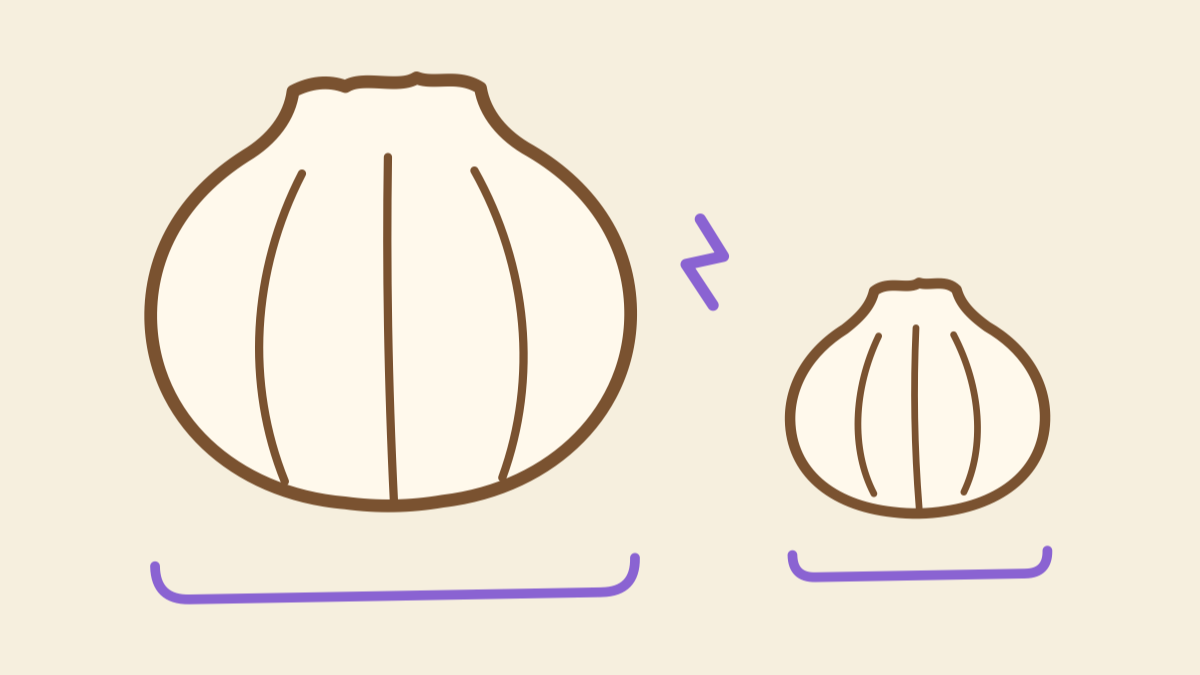
Elephant garlic and regular garlic are different species. Regular garlic is Allium sativum; elephant garlic is Allium ampeloprasum, a close relative of the leek. That single fact explains every difference that follows: the size (three to four times bigger), the flavour (mild and sweet instead of hot and pungent), and the way it behaves in the kitchen (happy to be eaten by the clove, not the sliver).
Side by side
| Elephant garlic | Regular garlic | |
|---|---|---|
| Species | Allium ampeloprasum (leek family) | Allium sativum (true garlic) |
| Bulb size | 7–10cm, 300–500g typical | 4–6cm, 40–80g |
| Cloves | 4–6, each thumb-sized | 10–20, fingertip-sized |
| Flavour | Mild, sweet, leek-like | Hot, pungent, sharp |
| Allicin (the burn) | Low | High |
| Raw use | Slice like a vegetable | Mince sparingly |
| Roasted | Spreads like butter, no bite | Sweetens but keeps heat |
| Keeps (cured) | 2–3 months | 3–6 months |
| UK price | ~£6 a bulb from growers | ~50p a bulb |
| Grow time | Oct → July | Oct → June/July |
The taste question, properly
Does elephant garlic taste the same as regular garlic? No — and that’s the point. Raw, it has a crisp, juicy texture with maybe a quarter of true garlic’s heat; closer to a spring onion that’s been thinking about garlic. Cooked, it goes gently sweet and savoury, like the best parts of a roasted leek. The trade: you lose the punch that stands up in a stir-fry or a raw dressing. It’s not worse garlic — it’s a different vegetable that happens to look like garlic.
Which settles “is elephant garlic as good as regular garlic?” — wrong question. For a curry base or aglio e olio where garlic must shout, regular wins. For roasting whole, plating as a vegetable, confit, or feeding people who find garlic repeats on them, elephant wins by a distance. Most serious kitchens want both in the basket.
Substituting one for the other works with arithmetic: one elephant clove ≈ a whole head’s worth of bulk but only ≈ 2–3 regular cloves’ worth of flavour. The recipes guide has the full conversion table.
”Is it hardneck or softneck?” — neither
A common growers’ question with a pub-quiz answer: hardneck and softneck are the two camps of true garlic, and elephant garlic belongs to neither, being a leek. It behaves like a hardneck — it throws a flower stalk (the scape, worth the price of admission alone) — but botanically it’s playing a different sport.
Same answer pattern for the named-variety questions:
- vs Russian/Music/Porcelain garlic — those are large hardneck true garlics: proper garlic heat in a bigger clove, though still nowhere near elephant size. If you want big AND fierce, they’re your crop. Big and gentle: elephant.
- vs aglione — the giant Tuscan allium is essentially elephant garlic’s Italian cousin (same species group), beloved for pici all’aglione. If a recipe calls for aglione, elephant garlic is the correct UK stand-in.
- vs onion or leek — it’s closer to these than to garlic in genetics, but the flavour sits in its own spot: more garlicky than a leek, sweeter than an onion, milder than all garlic.
Which should you buy?
Both, honestly — they do different jobs. Regular garlic is everywhere; elephant garlic takes some finding (here’s where it’s actually sold in the UK). If the job is a showpiece (whole-roasted bulb on the table, cloves confit in a jar, garlic butter by the fistful), that’s the culinary drop. And if you’d rather grow the giant yourself, the seed drop plants in October — the full growing method is here, and what is elephant garlic? has the whole backstory.
The short version
- Different species: elephant garlic is a giant, mild leek relative, not true garlic.
- 3–4× the size, a fraction of the heat — one clove covers a roast dinner.
- Neither hardneck nor softneck; the UK stand-in for Italian aglione.
- Regular garlic for punch; elephant garlic for eating in quantity.