Elephant garlic confit: cloves cooked to jam
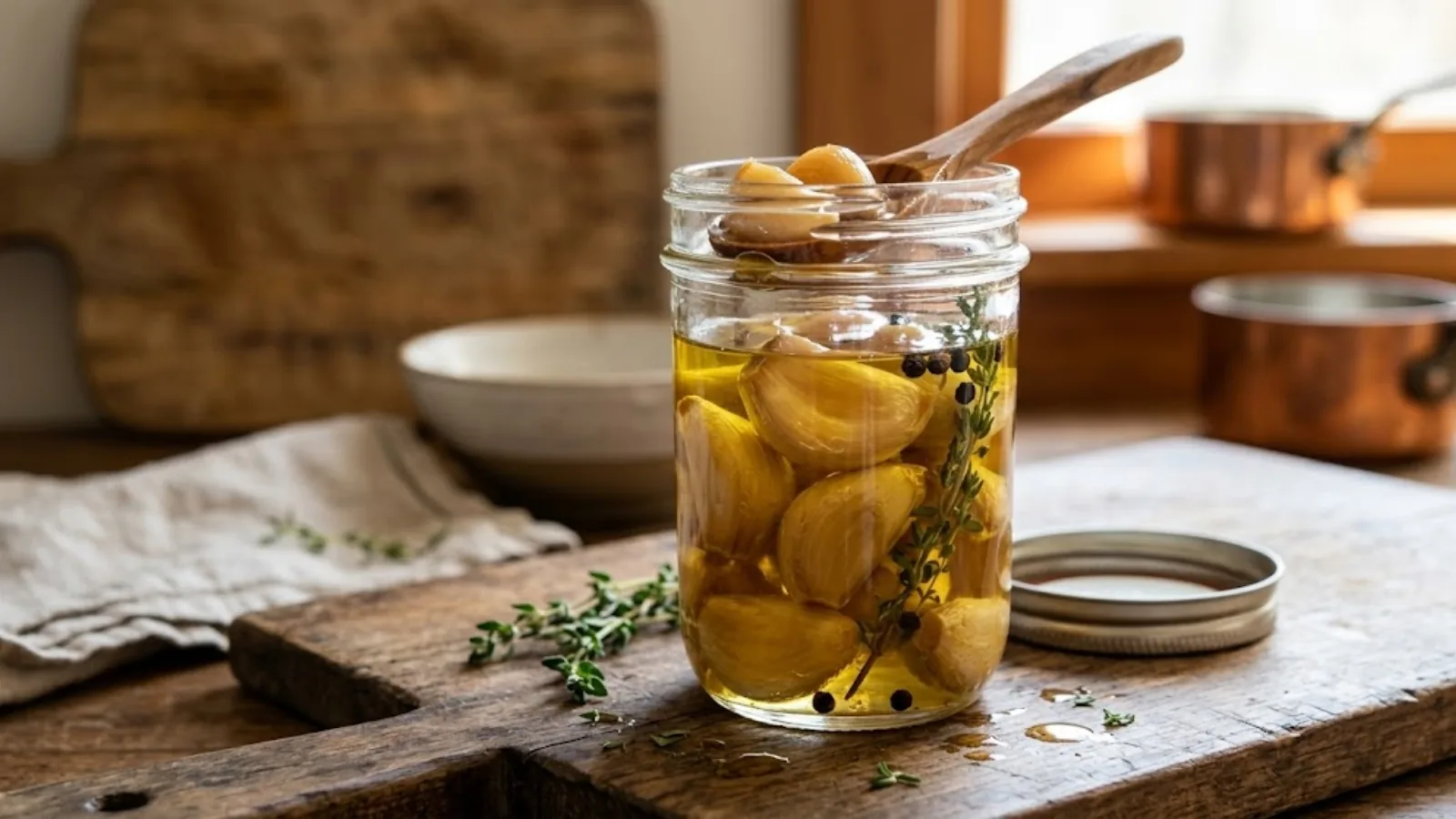
Confit is what elephant garlic’s oversized cloves are made for. Cooked slowly in oil at a low temperature, a thumb-sized clove turns soft, sweet and spreadable — it crushes to a paste like jam, and the oil it leaves behind is garlic gold in its own right. Because elephant garlic cloves are three or four times the size of ordinary garlic, you get a jar of confit for a fraction of the peeling. I grow these in Lincolnshire, and confit is how I keep a bit of the harvest usable for weeks after.
How do you confit elephant garlic?
Peel the cloves from two or three bulbs, pack them in a small pan, cover with olive oil, and cook at 120–130°C for 40–45 minutes until soft and pale gold. Keep the heat low — the oil should barely tremble, never fry. Cool the cloves in the oil and store them submerged. The result spreads like butter and the infused oil is a bonus.
The gentle temperature is the whole trick. Confit is poaching in oil, not frying: get it too hot and you fry the cloves and lose the silky texture. Low and slow, every time.
The method
- Peel. Elephant garlic cloves peel easily — a couple of bulbs gives you about 200g, enough for a small jar. Fewer, bigger cloves means less fiddly work than ordinary garlic.
- Pack and cover. Single layer in the smallest pan they fit, then oil to just cover. Add thyme, rosemary, lemon peel or peppercorns if you want them.
- Cook low. 120–130°C, oven or lowest hob, 40–45 minutes. You’re looking for soft and pale gold, not browned. If it’s bubbling briskly, the heat’s too high.
- Test. A clove should crush to a paste with no resistance.
- Cool and jar. Cool in the oil, then transfer to a clean jar with the cloves fully covered.
What to do with a jar of it
- Spread whole cloves on toast or into a cheese sandwich before it’s toasted.
- Mash into dressings, mayo or a quick dip — confit garlic is the base of a very good aioli.
- Stir through mash, pasta or roast vegetables.
- Use the oil for frying eggs, dressing salad, or brushing on bread. Don’t waste it.
The jar never lasts as long as I mean it to. Partly because it’s delicious, partly because it genuinely shouldn’t be kept long — see below.
How long does it keep — and the safety bit
Keep confit garlic in the fridge and use it within about a week, or freeze it for longer (an ice-cube tray works well). Garlic stored in oil can, in the wrong conditions, grow the bacteria that cause botulism, and elephant garlic is no exception — so this is not a shelf-stable, leave-it-in-the-cupboard preserve. Cold storage, cloves fully submerged, short keeping, or the freezer. The Food Standards Agency has the general guidance on garlic-in-oil if you want the detail.
That caveat aside, it’s one of the simplest ways to make a bulb go a long way.
The short version
- Peel cloves from 2–3 bulbs (~200g), cover with oil, cook 120–130°C for 40–45 min until soft and pale gold.
- Low and slow — poaching, not frying. Bubbling hard means too hot.
- Fridge one week or freeze. Keep cloves submerged; never store at room temperature.
- Spread the cloves, keep the oil, and don’t hoard it.
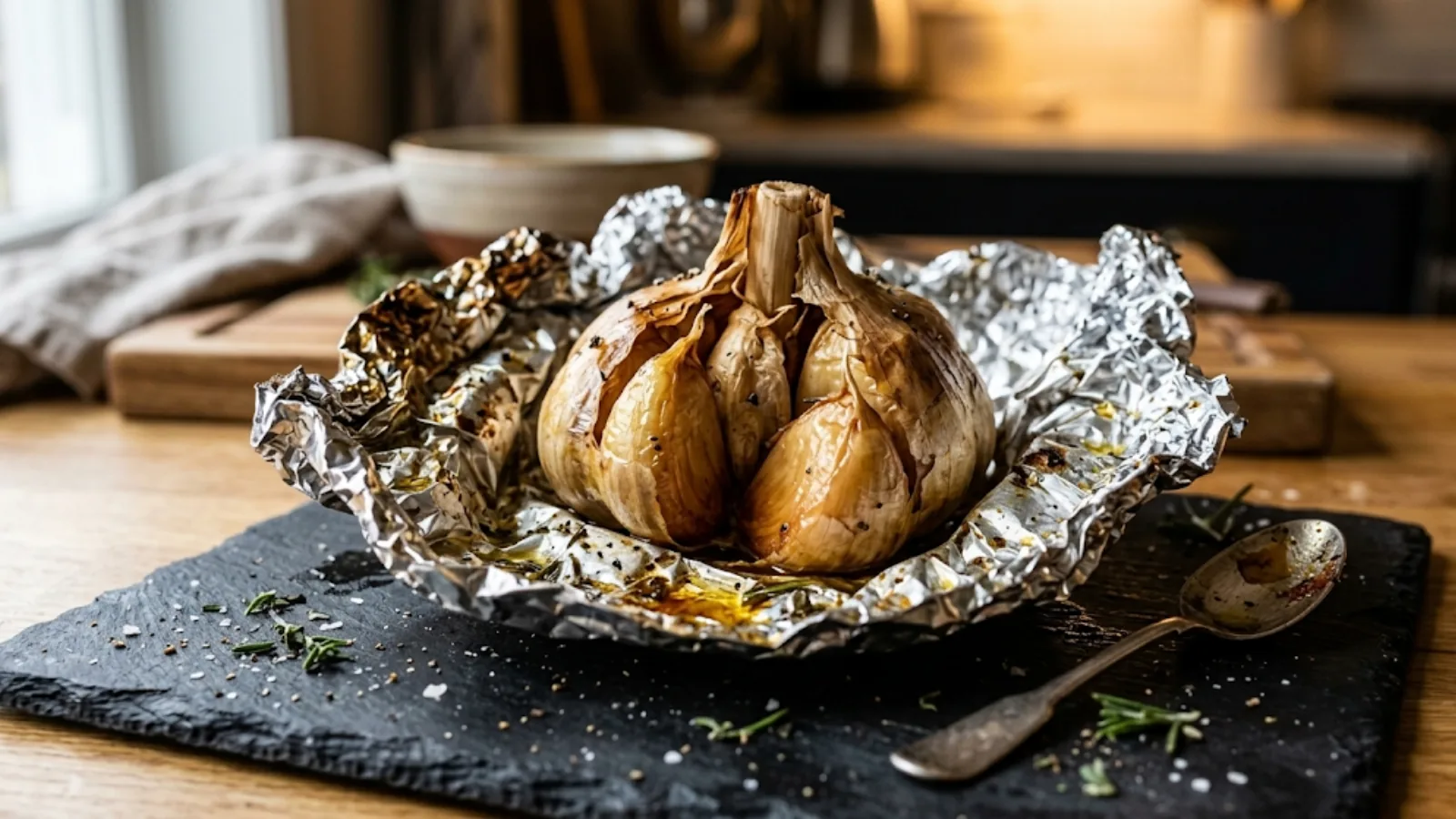
Bulbs with cloves this size ship with the July culinary drop — made for exactly this. For the mellower, faster route, there’s elephant garlic butter; for the showpiece, roast one whole.